
Two teeth.
One space.
Act while they’re growing.
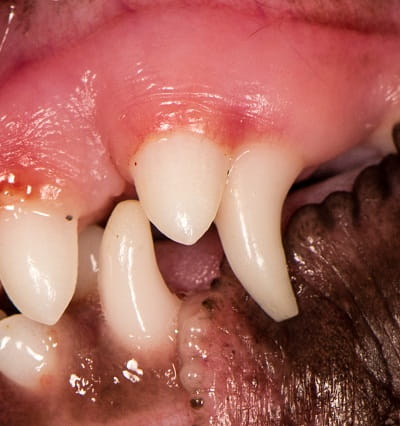
Baby teeth are meant to fall out as adult teeth arrive. When a baby tooth stays put beside its permanent successor, the crowded pair can trap plaque, push teeth out of position, and injure the roof or floor of the mouth.
! Notice a small tooth still beside a larger adult tooth? Ask your veterinarian to check the bite and eruption pattern promptly— especially if a canine tooth points into the palate or gum.
better options
The “double tooth”
is more than a quirk.
Look where the adult tooth is erupting. If the smaller baby tooth is still beside it, the adult tooth may be crowded or forced into a harmful position. Canines are commonly retained, but other baby teeth can remain too.
Do not pull or wiggle a baby tooth at home. Puppy and kitten teeth have long, delicate roots close to developing adult teeth.
Some retained teeth cause no obvious behavior change. A routine puppy or kitten exam is a good time to check which teeth have erupted and whether baby teeth have shed.
A retained baby tooth can crowd its adult successor. A malpositioned canine may also traumatize nearby soft tissue.
Baby teeth should
make room for adult teeth.
Deciduous teeth—also called primary or baby teeth—are temporary. A tooth is considered persistent or retained when it remains after the permanent tooth has erupted into the same area.
The permanent tooth follows a path into position as the puppy or kitten grows.
Two teeth occupy a space designed for one. Food and plaque can collect in the gap.
The permanent tooth may be displaced, or its tip may press into the palate or gum and cause pain or injury.
While the jaw is growing,
small changes can matter.
Many puppies and kittens finish replacing their baby teeth at around six months of age, though timing varies by individual and tooth. A veterinarian can check eruption at puppy and kitten visits and advise whether a retained tooth needs prompt attention.
Early evaluation is especially important when teeth are colliding or a canine is poking into soft tissue. The right timing and treatment depend on the bite, the teeth present, and the developing adult teeth.
Two rows of teeth can look harmless in a photo—and still change the bite.
Bring it up at the next veterinary visit, or contact your veterinarian sooner if a tooth is causing a wound, bleeding, or trouble eating.
Count the teeth.
Check the roots and bite.
The veterinary team checks which teeth are present, how they line up, whether there is tissue trauma, and whether the adult teeth are erupting normally. Dental radiographs can help identify roots and the position of developing teeth.
Veterinarian? Discuss a caseA careful assessment may include
Tooth charting and bite check
Identify baby and adult teeth, crowding, tooth contact, and any
injury to the palate or gums.
Oral examination
Assess gum health, plaque traps, discomfort, and the position of
the permanent teeth.
Dental radiographs when indicated
Help evaluate the baby tooth roots and the developing permanent
tooth so treatment can be planned carefully.
Individualized treatment decision
Consider extraction, observation in select cases, or referral for a
bite problem that needs specialized care.
Make room.
Protect what’s coming in.
If a baby tooth is interfering with its permanent successor or causing trauma, the veterinarian may recommend extraction. The procedure requires care because the roots sit close to developing adult teeth.
Remove the retained tooth
A veterinarian may recommend extraction when the baby tooth is crowding an adult tooth, trapping debris, or contributing to a harmful bite or soft-tissue injury.
Protect the permanent tooth
Baby canine roots can be long and fragile, and the developing permanent tooth is nearby. Imaging and a controlled surgical approach help guide safe treatment.
Address bite trauma too
Removing a baby tooth may not resolve every malocclusion. If adult teeth still contact the palate or gums, the team may discuss additional options or specialist referral.
Not every retained tooth has the same plan. AAHA notes that a retained deciduous tooth without a replacement permanent tooth may sometimes remain stable, while extraction may be needed if the dentition is unstable. Your veterinarian will assess the specific tooth and mouth.
Found a second tooth
in the same spot?
Ask your veterinarian to check your puppy or kitten’s developing bite. If a retained tooth is causing trauma or you need help understanding the options, DVDP can coordinate with your primary veterinarian.
Delaware Veterinary Dental Practice · Wilmington and Dover, DE · (302) 463-2879
Questions pet parents ask.
What are deciduous teeth?
Deciduous teeth are a pet’s first set of teeth, commonly called baby or primary teeth. They are gradually replaced by permanent adult teeth as the puppy or kitten grows.
How do I know if my puppy has a retained baby tooth?
Look for a baby tooth still beside the adult tooth erupting in the same position, often creating two teeth close together. A veterinarian can confirm which teeth are present and whether the bite is affected.
Are retained baby teeth common in dogs and cats?
They are seen more often in dogs, especially small and toy breeds, but cats can also have persistent deciduous teeth. Any puppy or kitten can benefit from having tooth eruption checked during routine visits.
Should I pull a retained baby tooth myself?
No. Baby tooth roots can be long and delicate, and developing adult teeth lie close by. A veterinarian should assess and treat the tooth.
Does every retained baby tooth need extraction?
Not always. The recommendation depends on whether an adult tooth is present, whether the tooth is stable, and whether crowding, trauma, or other dental problems are occurring.
Will removing the baby tooth automatically fix the bite?
It may help the permanent tooth erupt or sit more favorably, but it does not correct every malocclusion. The veterinary team should recheck how the teeth contact after treatment.