
Dental conditions · Dogs & cats
When the bite is off, comfort comes first.
A crooked tooth can be more than a quirky smile. If teeth press into the gums, lip, or roof of the mouth, they can cause repeated injury. Here’s what to look for—and when to get your pet’s bite checked.

Photo: RSPCA Queensland.
What malocclusion means
Teeth or jaws that don’t meet as expected.
Malocclusion is an abnormal alignment of the teeth, jaws, or both. The key question is whether the bite causes pain, injury, or difficulty with normal function.

Four patterns veterinarians describe
See what each class can look like.
Class describes the alignment pattern. It does not by itself determine whether treatment is needed.
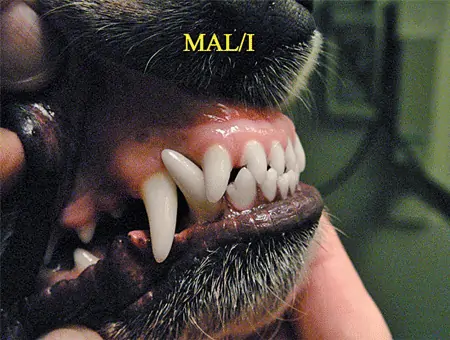
A tooth is out of position
The jaws have a generally normal relationship, but one or more teeth sit abnormally.
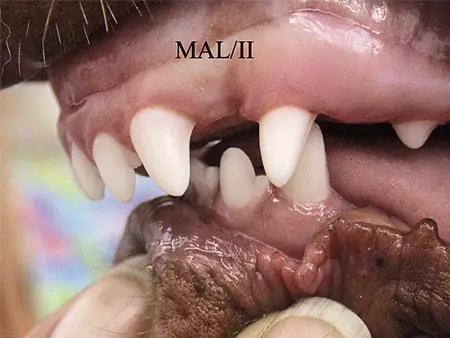
Lower jaw farther back
Also called mandibular distoclusion; often described as an overbite.
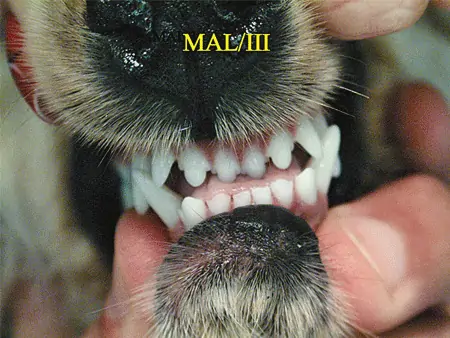
Lower jaw farther forward
Also called mandibular mesioclusion; often described as an underbite.

Jaws are asymmetric
The bite is shifted or uneven from side to side or in another direction.

Especially important in young pets
Baby teeth and hidden teeth can change the picture.
- Retained baby teeth can crowd adult teeth as they erupt.
- A tooth that never appeared may be unerupted beneath the gum; dental radiographs can help locate it.
- Some unerupted teeth can be associated with a dentigerous cyst.
A bite check during growth can help identify concerns while the teeth and jaws are developing.

Evaluation and care
The right plan depends on the contact—and the pet.
A veterinary dental team checks how the teeth meet, looks for injury, and may recommend dental radiographs. Depending on the findings, care may include:
Never file, cut, or try to move a tooth at home. Your veterinarian can explain which options are appropriate for your pet.
Delaware Veterinary Dental Practice
Concerned about your pet’s bite?
We can assess the concern, explain what we find, and talk through next steps.
For pet parents
Book a dental consultation at one of our Delaware locations.

For veterinarians
Discuss a case with DVDP’s board-certified veterinary dentist and anesthesiologist.
 Request a case consultation