
A Lump in Your Pet’s Mouth? Get It Checked.
A bump on the gums, a swelling beneath the tongue, or a growth near a tooth can have many causes. Some are noncancerous. Some are serious. You cannot tell what an oral mass is just by looking at it. The sooner it is examined, the sooner you can understand what you are dealing with and what to do next.
A new, growing, bleeding, or painful oral mass should be assessed by a veterinarian promptly.

Clinical example of an oral mass in a dog. Image source.
Do not wait for a mass to become large. Contact your veterinarian if you notice a new lump, unexplained bleeding, facial swelling, trouble eating, or a tooth that becomes loose or falls out.
Call DVDP: (302) 463-2879“Mass” describes what you see—not what caused it
An oral mass is an abnormal lump, swelling, or tissue growth in the mouth. It may occur on the gums, lips, tongue, palate, jaw, or around a tooth. Some masses arise from inflammation or cysts; others may be benign or malignant tumors.
Conditions such as gingival hyperplasia, severe inflammation, dental cysts, and tumors can sometimes look alike. A veterinarian may need to sample the tissue to identify it accurately.
A scary-looking lump is not automatically cancer—and a harmless-looking one is not automatically safe. Appearance alone cannot provide a reliable diagnosis.
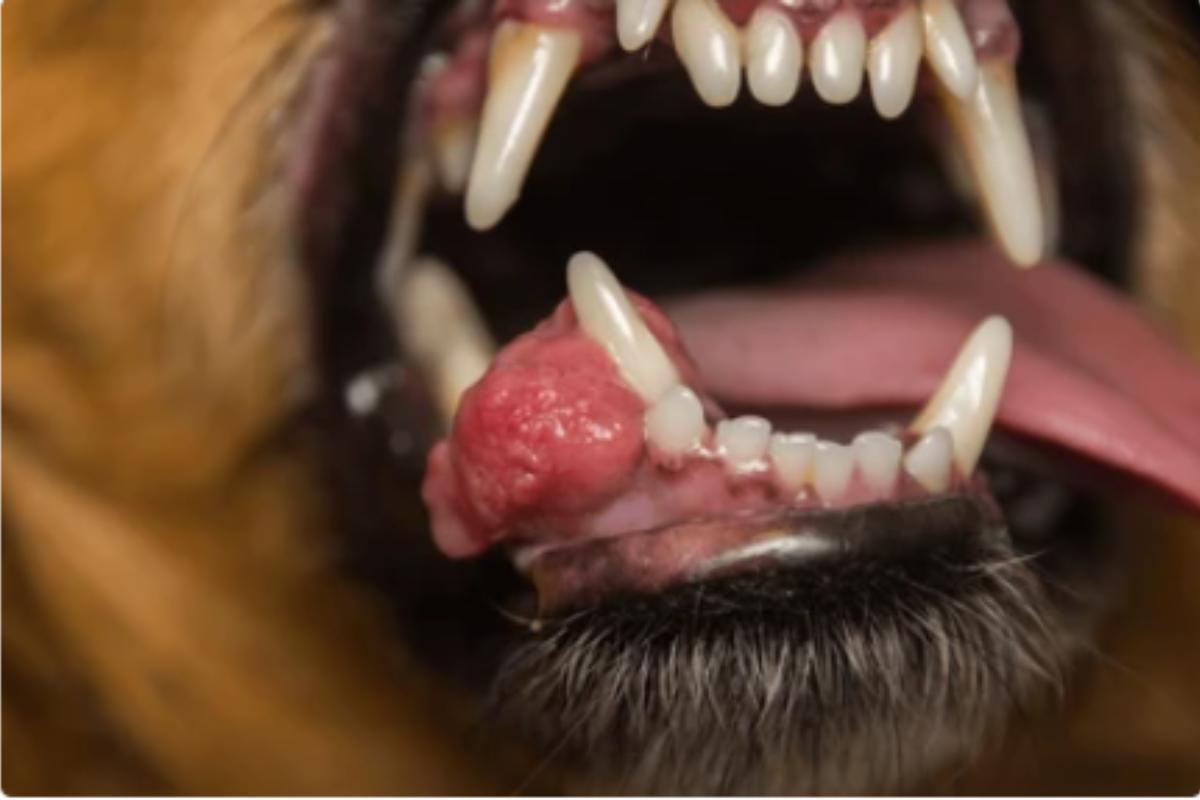
Oral growths can take different forms and need veterinary evaluation. Image source.
Oral masses can hide in plain sight
Pets may keep eating despite mouth discomfort. Look for a change from your pet’s normal behavior, appearance, or eating habits.
A visible lump or thickened area
A growth may appear on the gums, lips, tongue, palate, or jaw.
Blood in food, water, or saliva
Bleeding may occur spontaneously or when your pet eats or chews.
Drooling or bad breath
New or worsening odor and saliva can accompany oral disease.
Changes in eating
Your pet may drop food, chew differently, eat slowly, or avoid meals.
Facial swelling or asymmetry
A mass involving deeper tissues or bone may change the face or jaw.
Loose teeth or weight loss
Unexpected tooth loss, reduced appetite, or weight change needs attention.
Seek urgent veterinary care if your pet has difficulty breathing or swallowing, uncontrolled bleeding, severe pain, or cannot eat or drink.
What might an oral mass be?
This list is not a diagnosis. Your veterinarian uses an examination and appropriate testing to determine what a particular mass represents.
Gingival hyperplasia
Overgrown gum tissue can form folds around teeth and may create pockets that collect food and plaque.
Learn about gingival hyperplasiaInflammatory tissue
Inflammation related to dental or oral disease can cause swelling that may resemble a mass.
Learn about stomatitisDental cysts
Dentigerous cysts are associated with unerupted teeth and can affect nearby bone and developing structures.
Learn about dentigerous cystsOdontogenic growths
Some growths arise from tissues involved in tooth development or the structures around a tooth.
Benign tumors
Some oral tumors are noncancerous, but they may still grow, affect nearby teeth, or interfere with eating.
Malignant tumors
Some oral cancers can invade nearby tissue or spread. Early assessment helps guide diagnosis and planning.
The next step is a diagnosis—not a guess
Testing depends on the mass’s location, size, appearance, and effect on nearby teeth or bone. The veterinary team will explain which evaluations are appropriate for your pet.
Examination and history
The veterinarian reviews when the change began, how it has progressed, and whether eating or behavior has changed.
Imaging
Dental X-rays or other imaging may help assess teeth, jawbone, and the extent of the abnormal area.
Sample and laboratory analysis
A cell sample or biopsy may be needed. A pathologist examines the tissue to identify the type of lesion.
Why biopsy matters: Different oral conditions can look similar but need very different treatment. Tissue analysis can help distinguish inflammation, cysts, benign growths, and cancer.
There is no one-size-fits-all treatment
Care depends on the tissue diagnosis, location, size, and whether the mass affects nearby teeth, bone, or other structures. Options may include monitoring, surgery, dental treatment, or consultation with additional specialists.
- Confirm what the mass is whenever testing is recommended.
- Assess involvement of teeth, jaw, and surrounding tissues.
- Discuss treatment goals, possible risks, and next steps.
- Arrange follow-up to monitor healing or recurrence.
Take a photo, but don’t wait on the photo
If your pet allows it safely, a quick picture may help you show your veterinarian how the area has changed. Do not force the mouth open, press on the mass, or delay an examination to monitor it at home.
Do not apply human oral medications or topical products unless your veterinarian specifically recommends them.
Found a lump in your pet’s mouth?
Delaware Veterinary Dental Practice provides dental care for dogs and cats and works with referring veterinarians on oral health cases. Request an appointment to discuss an oral mass, diagnostic options, and whether referral care is appropriate.
For veterinarians
Need to discuss a patient with an oral mass or an unclear biopsy result? Contact DVDP to talk with the veterinary dental team about case evaluation, referral, and coordinated care.
Veterinary referral informationOral masses in dogs and cats: FAQs
Does every lump in a pet’s mouth mean cancer?
No. Oral lumps can have many causes, including inflammation, cysts, benign growths, and cancer. The appearance alone cannot reliably identify the cause.
How does a veterinarian diagnose an oral mass?
Evaluation may include an oral examination, dental X-rays or other imaging, and a sample of cells or tissue. A biopsy and laboratory analysis may be needed for a definitive diagnosis.
Can I monitor a mouth lump at home?
Contact your veterinarian when you notice a new or changing lump. A photo may help document its appearance, but it cannot determine what the mass is or replace an examination.
What are warning signs of an oral mass?
Signs can include a visible lump, bleeding, drooling, bad breath, facial swelling, difficulty eating, weight loss, or a loose or unexpectedly missing tooth. Some pets show few signs early on.
Are oral masses urgent?
Arrange a veterinary evaluation promptly for a new, growing, bleeding, or painful mass. Seek urgent care if your pet has difficulty breathing or swallowing, uncontrolled bleeding, severe pain, or cannot eat or drink.
Can my veterinarian consult with DVDP about an oral mass?
Referring veterinarians can contact Delaware Veterinary Dental Practice to discuss case evaluation, referral options, and coordinated care.