
When the mouth
meets the nose,
look closer.
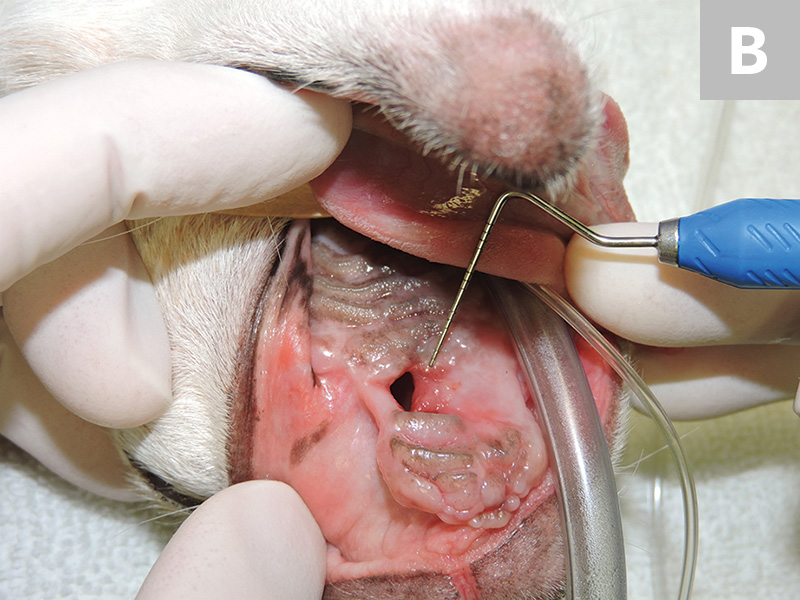
An oronasal fistula is an abnormal passage between a pet’s mouth and nasal cavity. It can let food, water and bacteria travel where they shouldn’t—and the warning signs may look like a stubborn “runny nose.”
! Persistent sneezing or discharge—especially with known dental disease, a loose or missing upper tooth, or a recent extraction— deserves a veterinary exam.
big connection
A nose problem
may start in the mouth.
Signs vary. Some pets show obvious nasal symptoms; others show very little. A fistula can be hard to see at home, especially when it sits beside an upper tooth.
Do not probe an opening or try to flush it at home. A veterinary team can examine the area safely.
These signs can have other causes. They do not confirm a fistula, but persistent or worsening symptoms should be assessed by a veterinarian.
A simplified cross-section: a fistula creates an unintended route between spaces that should remain separate.
A tiny route
that should not exist.
“Oronasal” describes the mouth and nose. A fistula is an abnormal passage connecting them. In dogs, severe periodontal disease around an upper canine is a common cause, though fistulas can occur around other upper teeth or after oral surgery, trauma, or a congenital defect.
Advanced disease can destroy gum and bone that normally separate the tooth roots from the nasal cavity.
The barrier breaks down, creating a connection from the mouth into the nose.
Food, fluid and oral bacteria can pass through the opening, contributing to chronic nasal irritation or infection.
No dramatic pain
doesn’t mean no problem.
Pets can hide discomfort, and a small opening may be tucked beside a tooth or beneath tissue. Some fistulas cause obvious nasal signs; some are discovered during a careful dental evaluation.
If a pet has persistent one-sided nasal discharge, recurring sneezing, or advanced disease around an upper tooth, tell the veterinarian about the full pattern—even if appetite and energy seem normal.
“It’s probably just allergies” can be an easy explanation to reach for.
When symptoms keep returning—or dental disease is also present—ask whether an oral source should be investigated.
The surface is only
part of the story.
A complete assessment looks at the mouth, the affected teeth and the structures beneath the gumline. The veterinary team may recommend an anesthetized oral exam and dental imaging to map the defect and plan treatment.
Veterinarian? Discuss a caseWhat a thorough evaluation may include
History and symptom pattern
When discharge or sneezing began, whether it is one-sided, and any
dental history or recent extraction.
Oral examination
Assessment of gum health, tooth mobility, missing teeth, and the
palate or tissue around upper teeth.
Dental radiographs
Images help evaluate tooth roots and surrounding bone that cannot
be judged from the crown alone.
Individualized plan
The findings guide whether the diseased tooth needs treatment and
how the opening can be closed.
Close the connection.
Address why it formed.
Treatment typically requires addressing the affected tooth or underlying cause and surgically closing the opening with healthy tissue.
Treat the diseased tooth
When periodontal damage is responsible, extraction of the affected tooth is often part of treatment. The right approach depends on examination and imaging findings.
Plan a secure closure
The fistula is prepared and covered with oral tissue. A successful repair needs healthy tissue and a closure that sits without excessive tension.
Protect recovery
Follow the team’s instructions for food, activity, medications and recheck visits. Report renewed nasal signs, wound concerns, or trouble eating.
Why specialist input can help: fistula location, tissue condition, size and prior repair attempts can affect the surgical plan. DVDP’s board-certified veterinary dentist and anesthesiologist can consult with a referring veterinarian on cases that need additional expertise.
Persistent nose signs?
Let’s look at the whole picture.
If your pet has recurring nasal discharge or sneezing alongside dental disease—or your veterinarian has mentioned a fistula—start with a conversation. A consultation helps the team understand the concern and explain what evaluation may be appropriate.
Delaware Veterinary Dental Practice · Wilmington, DE · (302) 463-2879
Questions pet parents ask.
Is an oronasal fistula an emergency?
It needs veterinary attention because the opening can allow ongoing irritation and contamination between the mouth and nose. Seek urgent care if your pet has difficulty breathing, heavy bleeding, marked facial swelling, cannot eat or drink, or seems acutely unwell.
Can I see an oronasal fistula at home?
Sometimes an opening may be visible, but many are small or hidden near an upper tooth. Do not probe the area. A veterinarian can examine it and use dental imaging when needed.
Does a fistula always cause nasal discharge?
No. Some pets have sneezing or discharge, while others show few obvious signs. The presence or absence of symptoms cannot confirm or rule out a fistula.
Can antibiotics alone close the opening?
Medication may be recommended for specific findings, but it does not physically close an abnormal passage or correct a diseased tooth. Treatment is based on the cause and the veterinarian’s exam.
Can this happen after a tooth extraction?
It can occur as a complication, particularly when an opening is present or develops near an upper tooth. Contact the treating veterinary team if nasal symptoms appear or persist after oral surgery.